
Starting school at three is a big step. For many parents, it can be difficult to imagine what their child’s day will look like in a Montessori classroom. Will they be expected to sit still? What will they learn? And how will they manage in a classroom with children who may be several years older?
A Montessori classroom for a 3-year-old looks a little different from a traditional preschool. It is a carefully prepared environment where children are encouraged to explore, make choices, develop concentration, and—most importantly—learn to do things for themselves.
Montessori education recognises that young children have a strong desire to participate in their own lives. The familiar “Me do!” stage is not simply a phase to get through—it is an opportunity to support the child in becoming capable and confident.
When a child discovers, “I can do this myself,” they are building much more than a practical skill. They are developing confidence in their own abilities.
Learning in a Mixed-Age Classroom
One of the defining features of a Montessori classroom is its mixed-age structure. In our Mia Primary classrooms, children span from 30 months to 6 years old.
For an almost three-year-old, this means entering a community where some children are just beginning their Montessori journey, while others have already spent one or two years in the environment. This creates a natural opportunity for children to learn from one another. Younger children observe older children using materials, caring for the classroom and interacting with their friends. They see what is possible and often become eager to try things for themselves.
Older children have the opportunity to become role models and helpers. Having once been the youngest in the classroom, they can now show others how things are done. The result is a classroom community where children learn not only from their teachers, but also from one another.
The Importance of the Three-Year Cycle
A Montessori Primary classroom is designed around a three-year cycle. This is particularly important when considering what a three-year-old will experience.
The first year is not simply a preparation for the next school year. It is the beginning of a longer journey. During the first year, a child becomes familiar with the classroom, its routines and its materials. They develop concentration, coordination, language, independence and confidence. Over time, they become increasingly comfortable making choices and working independently. In the second year, the child builds on this foundation.
By the third year, something special happens. The child who once watched the older children now becomes one of the experienced members of the classroom. They have the opportunity to deepen their understanding, take on greater responsibility and become a role model for the younger children. This continuity is one of the strengths of the Montessori three-year cycle. Children are given time to grow into the environment rather than being moved from one classroom to another every year.

The Montessori Work Cycle
Another important part of the Montessori classroom is the uninterrupted work cycle.
Rather than moving the whole class from one activity to another according to a fixed schedule, Montessori classrooms protect a substantial period of uninterrupted time for children to choose and engage with their work. This time allows a child to move through their own rhythm. They may begin with a familiar activity, move on to something more challenging, take a break, and eventually settle into a period of deep concentration.
For a three-year-old, this uninterrupted time is particularly valuable. Concentration is a skill that develops gradually, and children need time and freedom to practise it. The Montessori teacher observes, introduces materials and provides guidance, while allowing the child the space to engage with their work independently.
Building Confidence Through Independence
Perhaps one of the most important things a Montessori classroom gives a three-year-old is the opportunity to experience themselves as capable.
Independence does not mean that children are left to figure everything out alone. Quite the opposite. The Montessori environment is carefully prepared, and the teacher is there to observe, guide and support each child.
The goal is to provide just enough help for the child to succeed—and then allow them the opportunity to try again themselves. A three-year-old who pours their own water, puts on their own coat, carries their work, completes a challenging activity or helps to tidy the classroom is building confidence through real experience.
They are learning that their actions matter. They can contribute. They can solve problems. They can persevere when something is difficult. These are skills that extend far beyond the Montessori classroom.
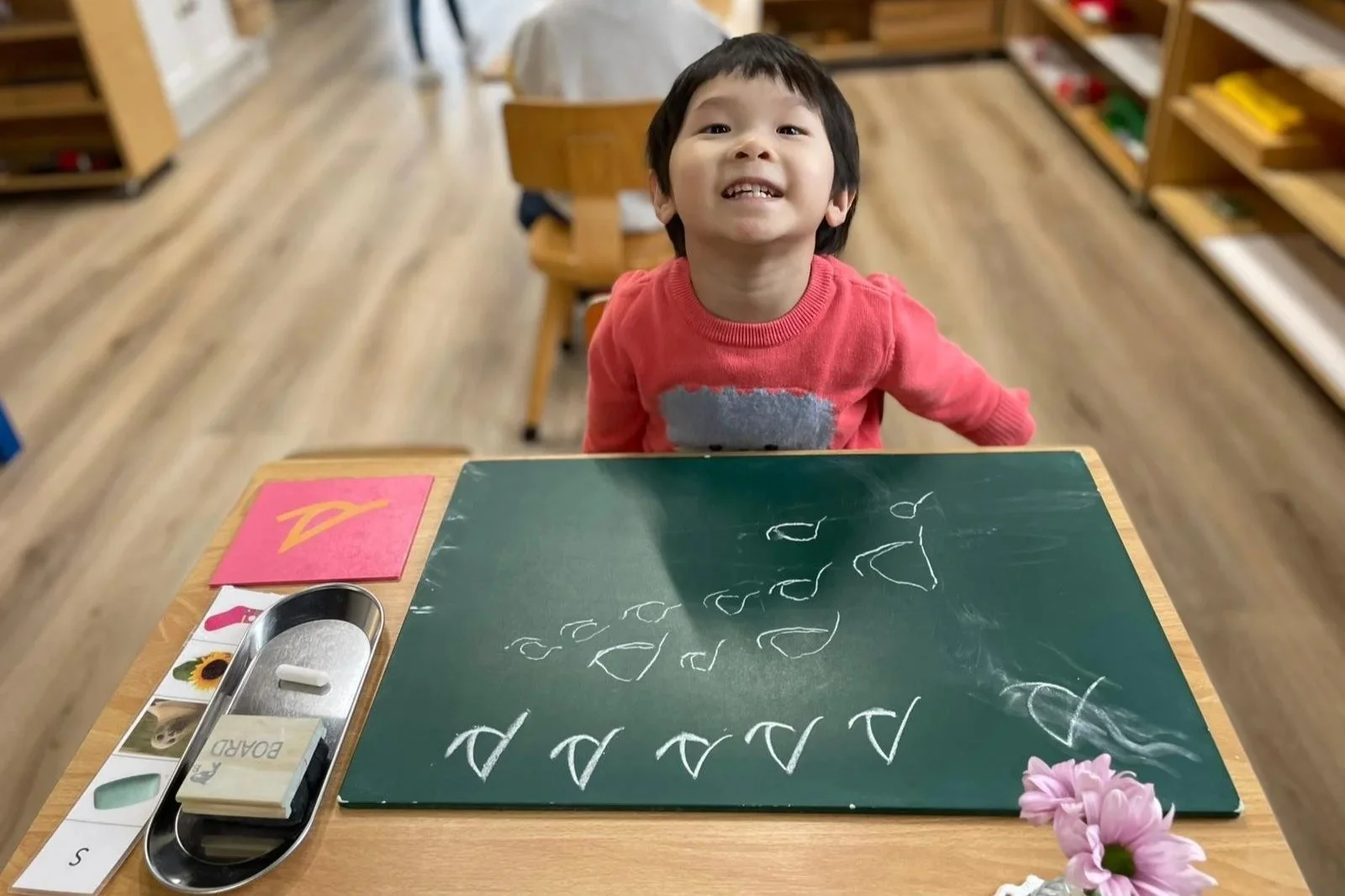
Montessori Primary Program Options at Mia Montessori Academy
Our Primary program for ages 30 months to 6 years old is offered five days a week, with several schedule options for families:
● Preschool Morning — 8:30am to 12:00pm
● Preschool Extended Day — 8:30am to 3:45pm
● Kindergarten — 8:30am to 3:45pm (starting the September a child turns 5)
● Mandarin Language Classes — 3:45–5:15pm, available 3 or 5 days a week for families wanting extended care
Regardless of which program your child attends, they're part of the same mixed-age Montessori classroom community.
A Place to Grow
So, what is a Montessori classroom like for a 2 or 3-year-old?
It is a place where children are trusted to participate in their own learning. It is a place where they can move, explore, repeat, make choices and develop concentration. It is a community where younger children learn from older children, and older children learn through responsibility.
Most importantly, it is an environment designed to help children become increasingly independent and confident in themselves.
At three years old, children are just beginning to discover all that they are capable of. A thoughtfully prepared Montessori environment gives them the time, space and support to discover it for themselves.
