
Walk into an authentic Montessori classroom and you'll notice something different almost immediately. Instead of brightly coloured plastic toys and learning materials, you'll find beautifully crafted wooden shelves, glass pitchers, ceramic bowls, woven baskets, and natural fabrics. Every material has been carefully selected with purpose.
At Mia Montessori Academy, we believe that the learning environment should inspire curiosity, independence, and respect. Natural materials are an essential part of creating a calm, beautiful classroom where children feel connected to their surroundings and motivated to learn.
Learning Through Real Experiences
Maria Montessori believed that children learn best through meaningful, hands-on experiences with real objects. Rather than imitating everyday life with plastic versions, Montessori classrooms invite children to use authentic materials that they may also encounter at home.
When children pour water from a glass pitcher, polish a wooden table, arrange flowers in a glass vase, or prepare a healthy snack using ceramic dishes, they are developing practical life skills while building confidence and independence.
These activities teach children that they are capable contributors to their community and encourage them to care for both themselves and their environment.
Why Natural Materials Matter
Natural materials engage the senses in ways that plastic simply cannot.
Wood has a unique texture and warmth. Glass reflects light and encourages careful handling. Ceramic, metal, cotton, and natural fibres each provide distinct sensory experiences that help children refine their touch, coordination, and concentration.
Because every material feels slightly different, children develop a deeper awareness of the world around them. This rich sensory feedback supports cognitive development while making learning more meaningful and memorable.
Natural materials also create a peaceful classroom atmosphere. Soft colours, natural textures, and carefully prepared spaces reduce unnecessary visual stimulation, allowing children to focus more deeply on their work.
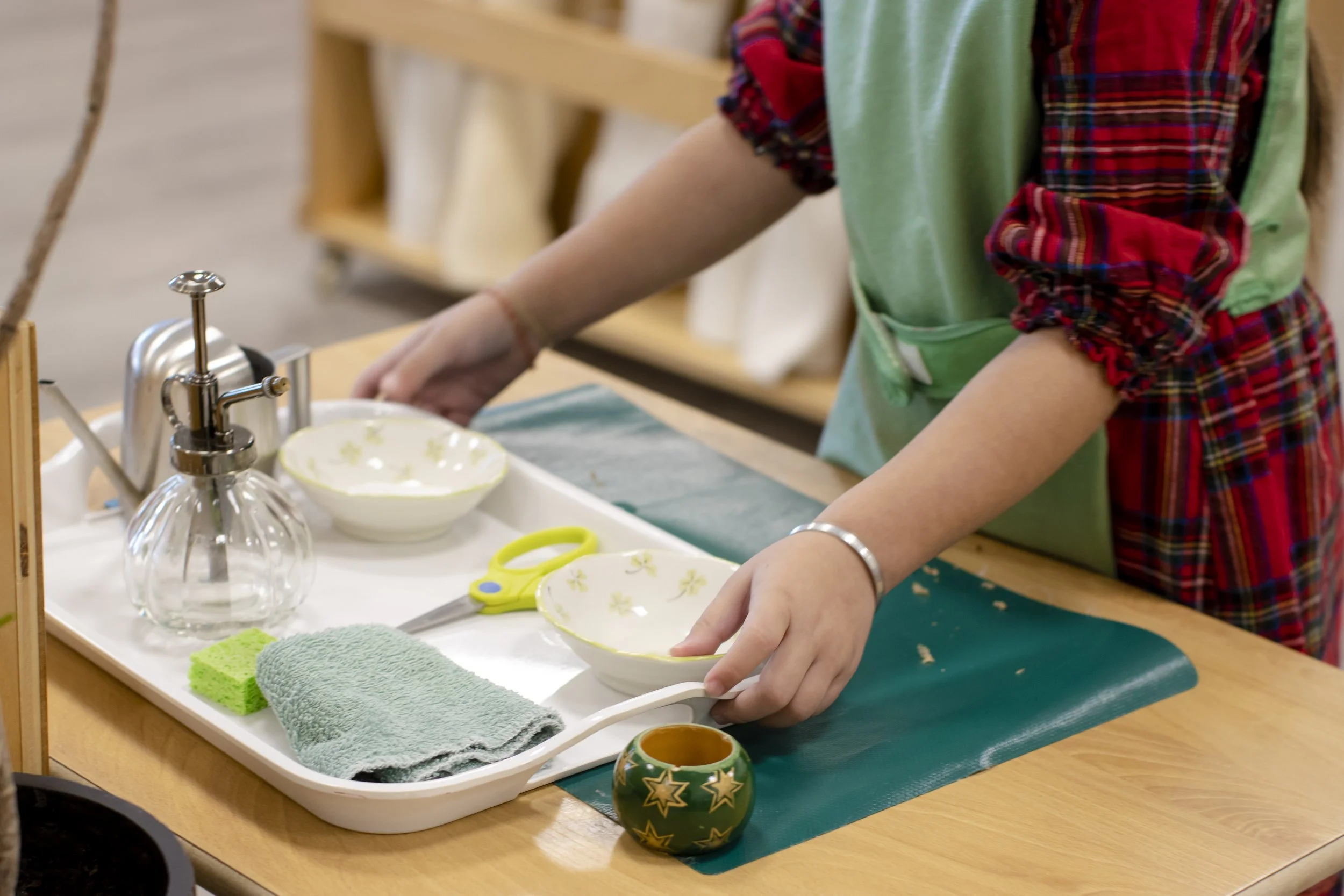
Preparing for practical life with real life objects.
Practical Life Materials You'll Find in a Montessori Classroom
Practical Life is one of the first areas children explore in a Montessori environment. These carefully designed activities strengthen fine motor skills, coordination, concentration, and independence while preparing children for everyday life.
Some of the natural materials commonly found in our classrooms include:
Wooden trays for presenting activities
Wooden spoons and tongs for transferring work
Glass pitchers for pouring water
Glass jars for sorting and transferring objects
Ceramic bowls and plates for food preparation
Small porcelain cups used during snack preparation
Metal watering cans for caring for classroom plants
Wooden brushes for sweeping and table washing
Cotton cloths and linen napkins for cleaning and polishing
Woven baskets for organising classroom materials
Wooden pegboards and threading activities
Natural sponges for washing tables and dishes
Glass vases for flower arranging
Child-sized wooden furniture designed for independence
Each material has a purpose and invites children to move carefully, thoughtfully, and with intention.
Learning Responsibility Through Real Materials
Some parents are surprised to see young children using glass or ceramic materials. In reality, these materials help children develop responsibility and self-control.
Children naturally learn to move more carefully when handling something real. If a glass pitcher breaks, it becomes a valuable learning opportunity rather than a reason for punishment. With a little guidance from their teachers, children can learn how to clean up safely, take responsibility for their actions, and try again!
This approach builds resilience, confidence, and respect for both materials and the people around them.
A More Sustainable Learning Environment
Choosing natural materials also reflects a commitment to sustainability. Wooden, glass, ceramic, and metal materials are durable, repairable, and often last for many years. Rather than replacing broken plastic items regularly, Montessori classrooms invest in high-quality materials that can be used by generations of children.
In all of our classrooms, children are encouraged to participate in recycling and reusing everyday items to create beautiful works of art and meaningful projects. Through these experiences, children learn that materials have value and can be transformed rather than discarded.
This respect for the environment helps children develop an appreciation for caring for the world around them—an important lesson that extends well beyond the classroom.
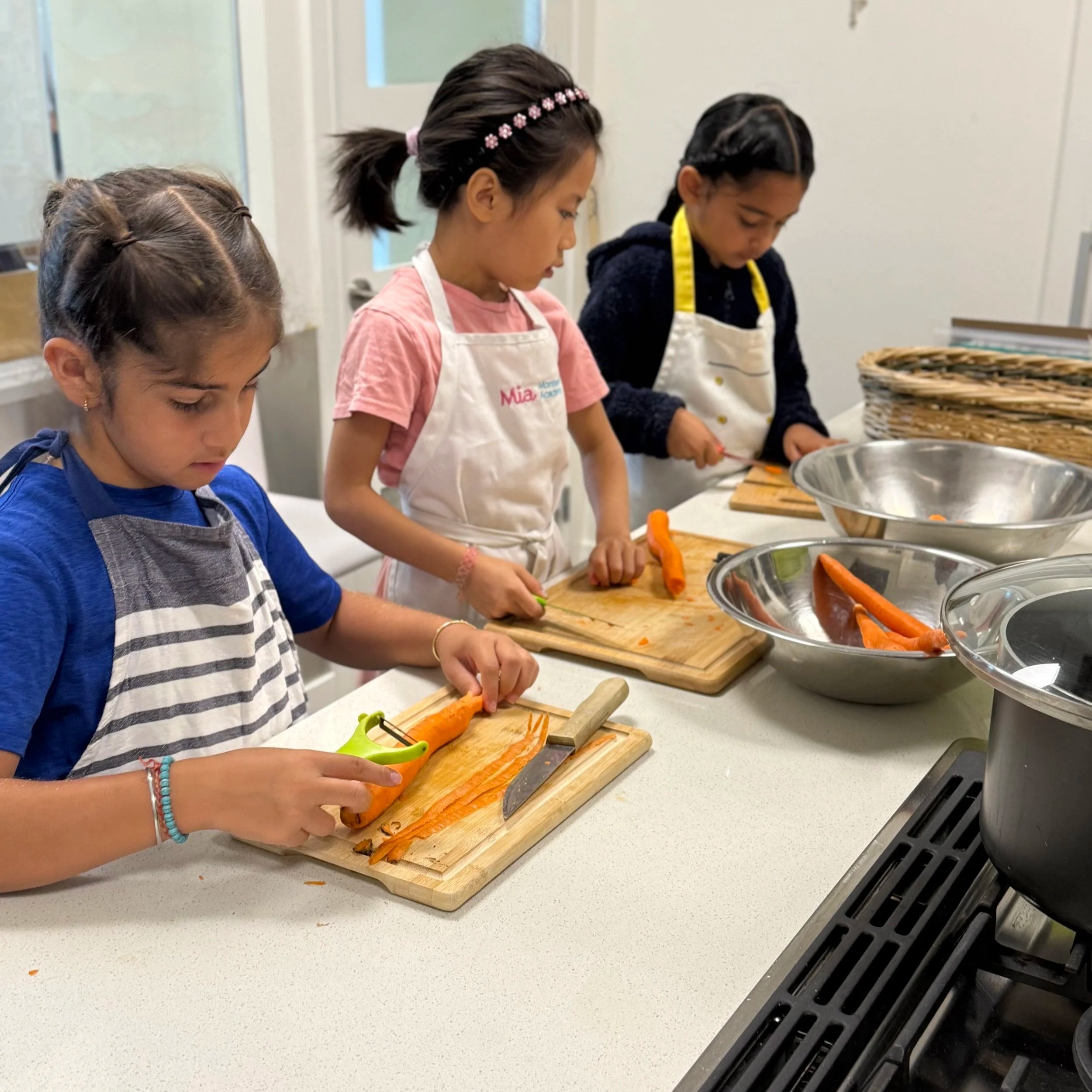
Preparing lunch together, using appropriate kitchen tools.
Creating a Beautiful Place to Learn
A thoughtfully prepared classroom filled with natural materials invites children to slow down, concentrate, and take pride in their work. It fosters a sense of calm, order, and belonging that supports every aspect of their development.
At Mia Montessori Academy, every classroom is intentionally prepared with authentic Montessori materials and carefully chosen natural objects that encourage independence, creativity, and joyful discovery.
We believe that when children are surrounded by beauty, trusted with real materials, and given meaningful opportunities to care for themselves and their environment, they develop the confidence and skills that will serve them throughout their lives.
Montessori classrooms call it “work” because children are doing the important work of building themselves—intellectually, socially, and emotionally. It respects the child. In a Montessori classroom, children are doing real, developmentally appropriate tasks—pouring, building, reading, calculating, problem-solving. Calling it “work” honors the effort and focus children invest, just as we would with adults..
