
If you’ve ever visited the primary or elementary classrooms at Mia Montessori, you may have noticed something that sounds a little surprising at first: children talk about choosing their work.
Not their activity.
Not their assignment.
Not even their play.
Their work.
For families new to Montessori, this language can feel formal for early childhood education. But in a Montessori environment, the word work is intentional, respectful, and deeply meaningful.
“Play is the work of the child.”
— Dr. Maria Montessori
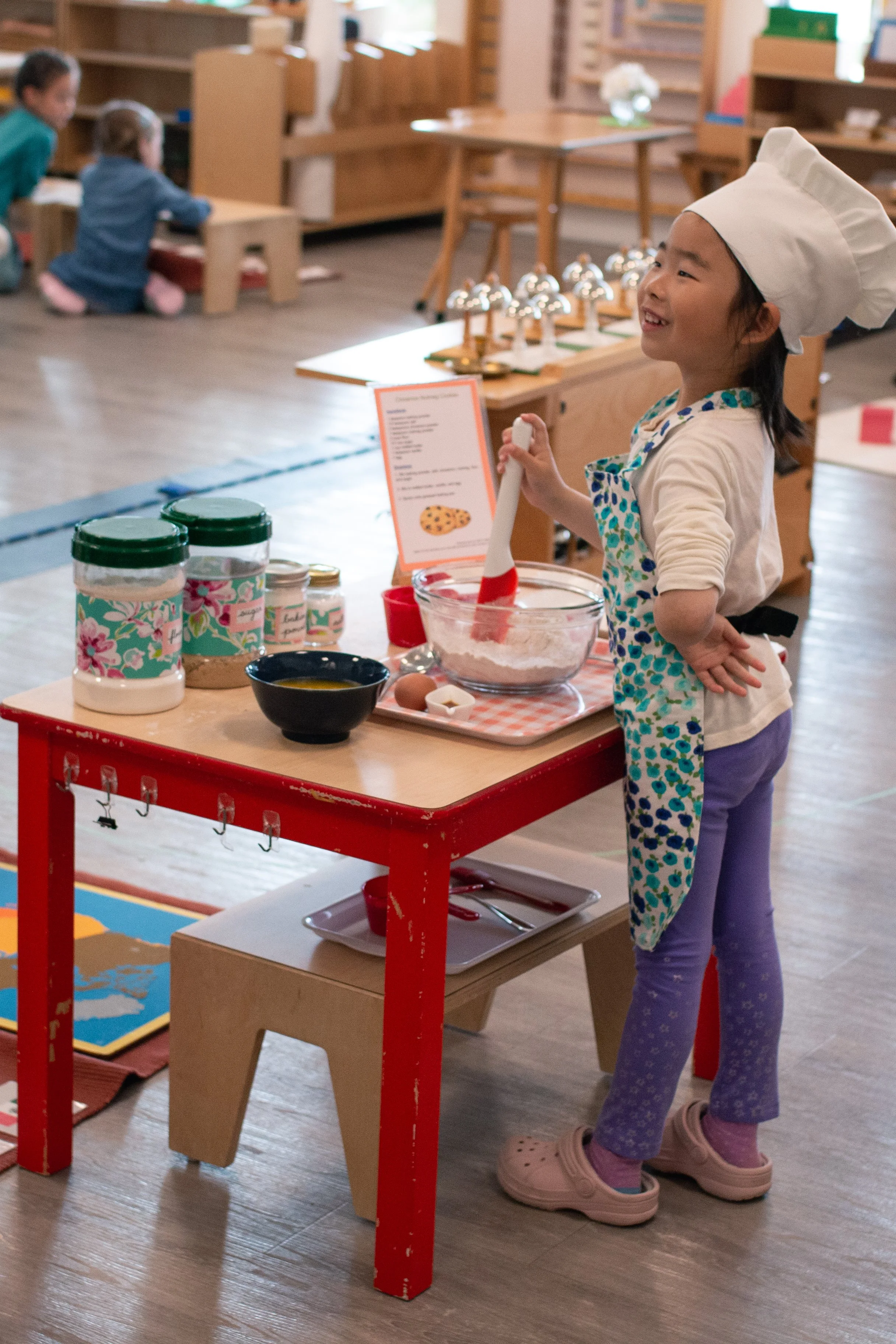
Honoring the Child’s Effort
The term comes from the observations of Maria Montessori, who saw that children are not passive learners. They are active builders of themselves. When a child carefully pours water, traces sandpaper letters, builds the Pink Tower, or solves a math problem, they are doing more than playing. They are:
Developing coordination
Refining concentration
Strengthening independence
Building neural pathways for future learning
Calling it work acknowledges the focus and effort children invest in these tasks. It communicates that what they are doing matters, because for the child, play is a serious and purposeful activity.
“ Grown-ups think of play as a purposeless occupation that keeps children happy and out of mischief, but actually when children are left to play by themselves very little of their activity is purposeless. ”
-Dr. Maria Montessori, Maria Montessori Speaks to Parents
Concentration Is the Real Goal
In a Montessori classroom, uninterrupted work cycles allow children to fully immerse themselves in a task. When a child becomes deeply focused—sometimes for 20, 30, or even 60 minutes—they are developing one of the most important foundations for lifelong learning: the ability to concentrate.
This is why we protect long work periods in our programs. You can learn more about how our classrooms are structured on our Programs page.
Independence Builds Confidence
Montessori work is carefully designed so children can complete it independently—from beginning to end.
They choose it.
They carry it.
They complete it.
They return it.
This cycle builds confidence in a powerful way. Instead of relying on constant adult direction, children begin to see themselves as capable problem-solvers.If you’re curious about how independence develops in early childhood, our Montessori philosophy page shares more about our approach.
“A child’s work is based on doing things for their own sake… through their work they are building who they will become.”
— Dr. Maria Montessori, Maria Montessori Speaks to Parents
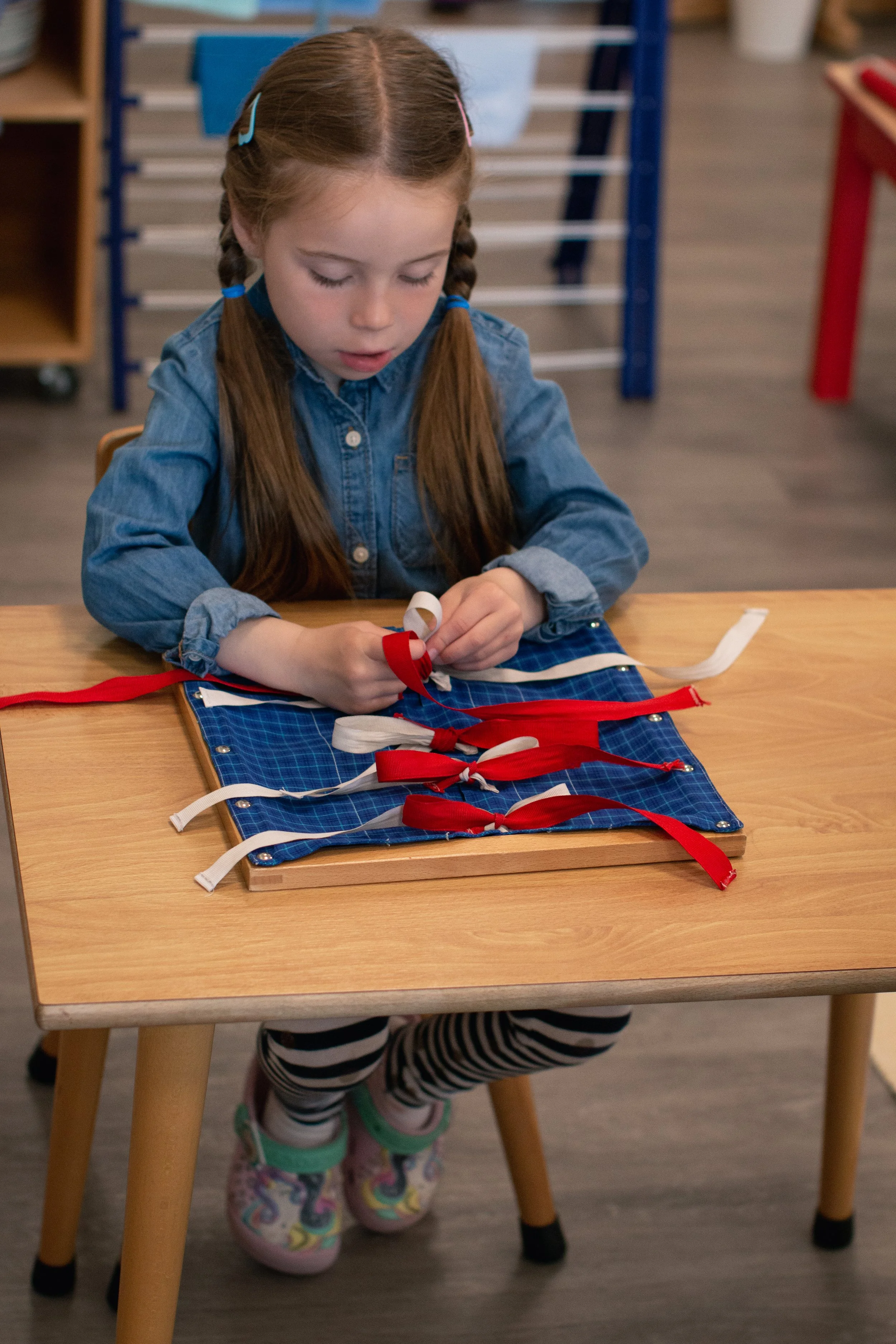
Work Is Joyful
Importantly, Montessori work is not rigid or pressured. It is joyful, hands-on, and self-directed. When children are free to choose meaningful tasks in a thoughtfully prepared environment, their “work” feels deeply satisfying. You’ll often hear a child say:
“I’m not done with my work yet.”
That sense of ownership is exactly what we hope to nurture.
Preparing for Life — Not Just School
When we use the word work, we are also planting a seed: that learning is purposeful and valuable.
Children who experience meaningful work develop:
Persistence
Responsibility
Intrinsic motivation
Respect for their environment
These qualities extend far beyond the classroom.
At Mia Montessori, we see each day that children are not simply learning letters and numbers—they are engaged in the important work of building themselves. As part of our commitment to partnership and transparency, we warmly invite parents to observe a morning work cycle in the classroom. During these quiet observation mornings, families often witness the calm focus, independence, and intrinsic motivation that define a Montessori environment.
Montessori classrooms call it “work” because children are doing the important work of building themselves—intellectually, socially, and emotionally. It respects the child. In a Montessori classroom, children are doing real, developmentally appropriate tasks—pouring, building, reading, calculating, problem-solving. Calling it “work” honors the effort and focus children invest, just as we would with adults.